Where the fear of fat came from
The "low-fat" movement of the 1980s and 90s was based largely on observational studies linking saturated fat to higher cardiovascular risk. As a result, the food industry replaced fat with sugar and refined carbs in thousands of products, which likely contributed to rising obesity rates in the following decades.
Current science is more nuanced: the American Heart Association's landmark advisory on dietary fats and cardiovascular disease concludes that replacing saturated fat with unsaturated fat (especially polyunsaturated fat) lowers cardiovascular disease risk, while replacing it with refined carbohydrates does not provide the same benefit.
💡 The problem is rarely "fat" in general, but rather what it gets replaced with when reduced, and which type of fat dominates the diet.
Not all fats are created equal
There are four main types of dietary fat, and their effect on cardiovascular health differs:
- Monounsaturated fat: found in olive oil, avocado and nuts. Consistently associated with cardiovascular benefits.
- Polyunsaturated fat (omega-3 and omega-6): found in oily fish, walnuts and seeds. Several clinical trials show that replacing saturated fat with polyunsaturated fat reduces cardiovascular events.
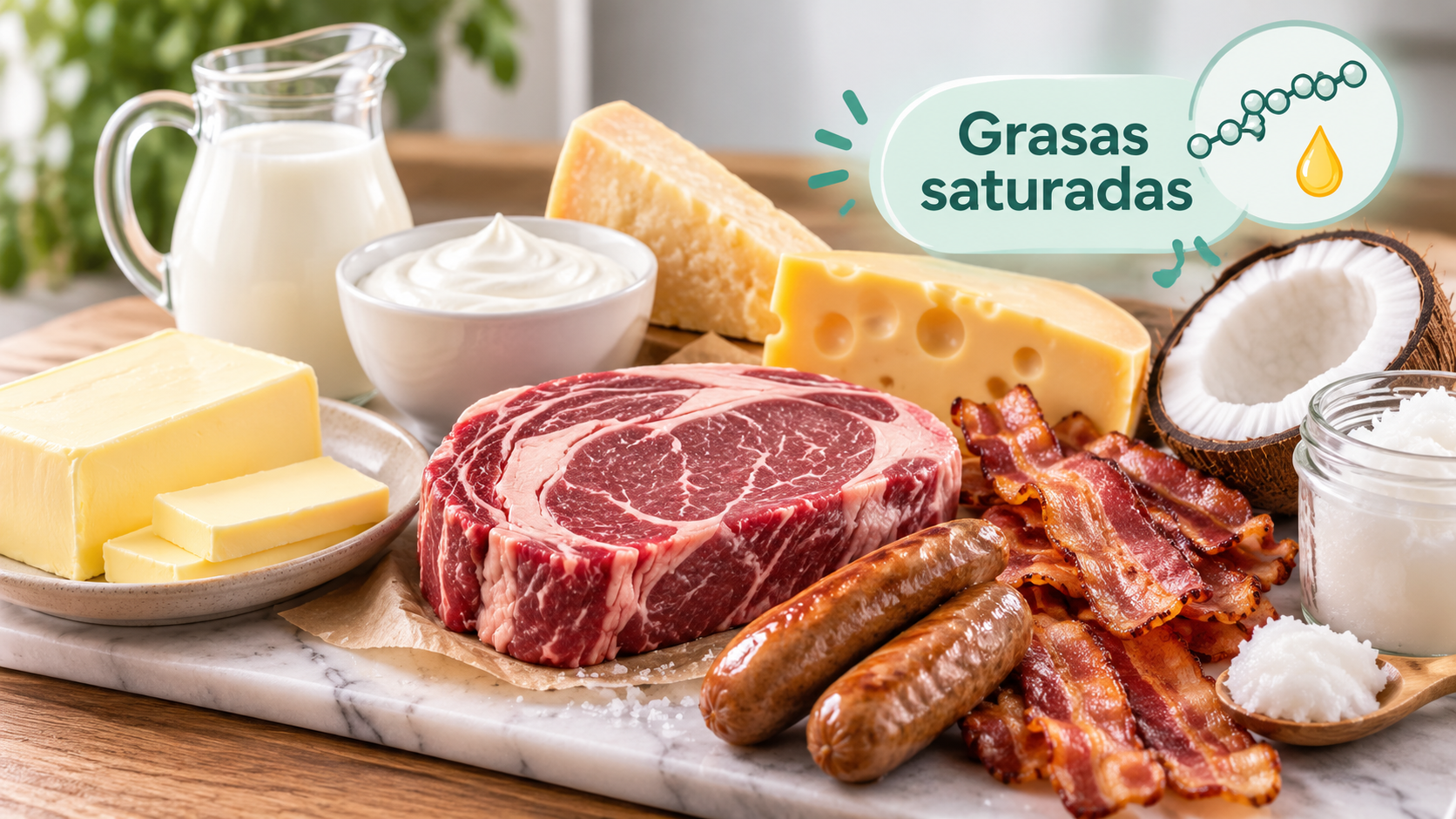
- Saturated fat: found in fatty meats, butter and full-fat dairy. The evidence on its real impact is more debated than commonly presented, but major scientific bodies still recommend moderating it.
- Trans fat (industrial): found in some ultra-processed products and packaged pastries. It's the only type with near-unanimous scientific consensus: it raises cardiovascular risk with no known benefit.
Comparison: fat types and their effect on health
| Fat type | Main sources | Effect on cardiovascular health |
|---|---|---|
| Monounsaturated | Olive oil, avocado, almonds | Beneficial |
| Polyunsaturated (omega-3) | Salmon, sardines, walnuts, flaxseed | Beneficial |
| Polyunsaturated (omega-6) | Vegetable oils, sunflower seeds | Beneficial in moderation |
| Saturated | Butter, fatty meats, cured sausage | Debated; moderation recommended |
| Industrial trans | Packaged pastries, hydrogenated margarines | Harmful, no known safe dose |
How much fat should you eat per day?
Dietary guidelines generally recommend that total fat make up 20-35% of daily calories, prioritizing unsaturated sources. There's no solid reason for the general population to follow extremely low-fat diets, unless specifically directed by a doctor.
🎯 In practice: prioritize olive oil, oily fish, nuts and avocado. Moderate (not necessarily eliminate) fatty meats and full-fat dairy. Avoid industrial trans fats whenever possible.
What about dietary cholesterol?
For years, foods like eggs were restricted due to their dietary cholesterol content. Current evidence shows that, for most healthy people, the cholesterol you eat has a much smaller impact on blood cholesterol than once thought; the main dietary factor that consistently raises it is excess saturated and trans fat, not dietary cholesterol itself.
Does fat make you gain more weight than other macronutrients?
Fat provides 9 kcal per gram, versus 4 kcal per gram for protein and carbs, so it's easier to pack a lot of calories into a small volume of food. This ties into the concept of energy density we covered in our guide on energy density of foods. But this doesn't mean fat inherently "makes you gain more weight" per gram: what drives weight gain is total calorie balance, not a single macronutrient in isolation.
Frequently asked questions
Should I eliminate saturated fat completely?
There's no need to eliminate it entirely. The general recommendation from major scientific bodies is to moderate it and prioritize replacing it with unsaturated fat where possible, not to remove it absolutely.
Do nuts make you gain weight because of their high fat content?
Despite being calorie-dense, several observational studies link moderate, regular nut consumption with lower cardiovascular risk rather than greater weight gain, likely due to their satiating effect and healthy fat profile.
Are ketogenic diets (very high in fat) recommended for everyone?
There's no evidence they're superior to other dietary patterns for the general population long-term, and they may not be suitable for everyone. Any drastic dietary change should be discussed with a healthcare professional.
Track your fats without the hassle
With Comeloia you can see at a glance how much total, saturated and unsaturated fat you're getting each day just by photographing your meals.


Summary: what to remember
- Not all fats act the same: monounsaturated and polyunsaturated are beneficial; industrial trans fats are the only ones clearly harmful.
- Replacing saturated fat with unsaturated fat lowers cardiovascular risk more than replacing it with refined carbs.
- Dietary cholesterol has less impact on blood cholesterol than once believed.
- Fat doesn't "make you gain more weight" on its own: what matters is total calorie balance.
- Prioritize olive oil, oily fish and nuts over ultra-processed products.
← Back to blog