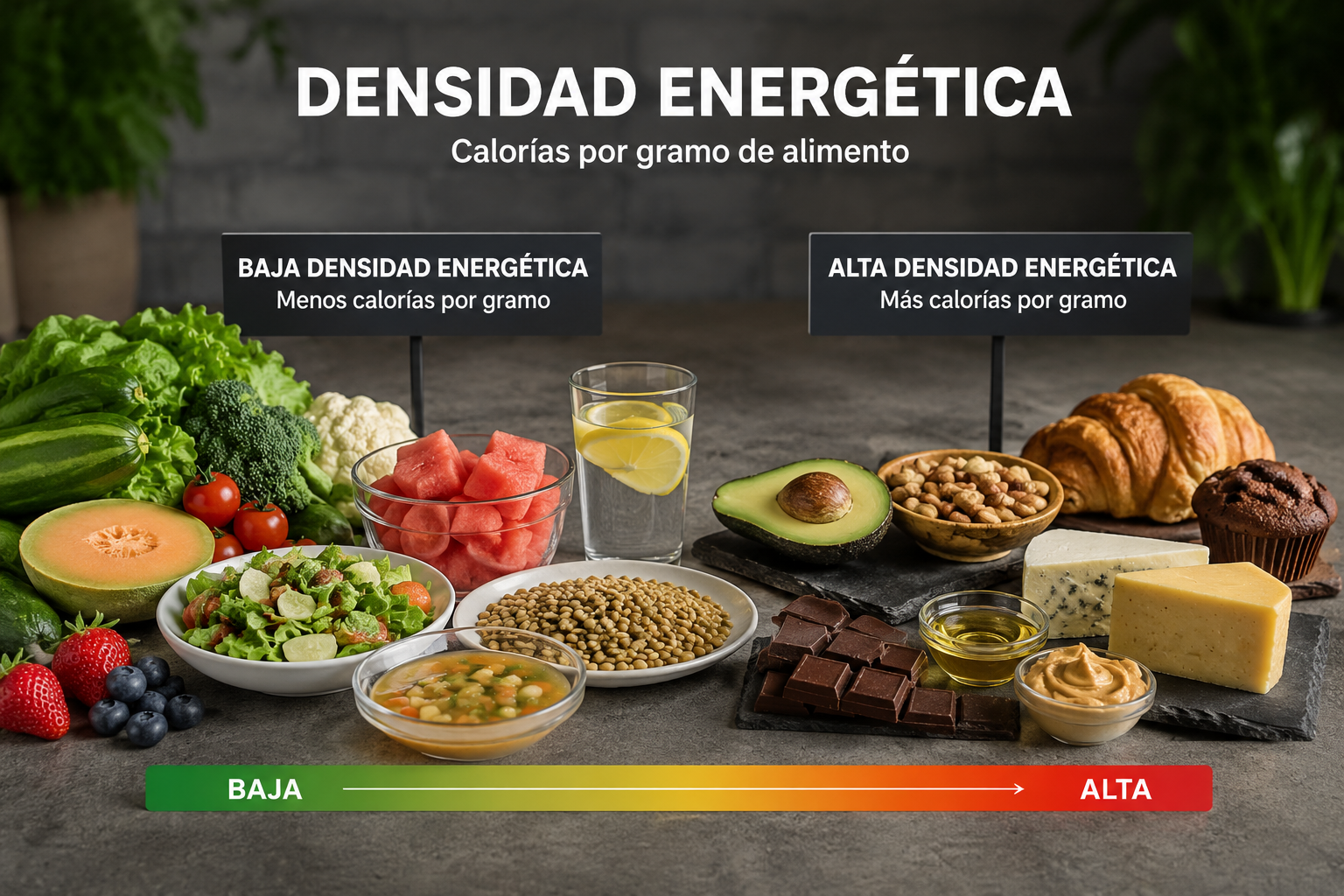
What is energy density?
Energy density is the amount of calories a food provides per gram of weight. A food with high energy density packs a lot of calories into little weight or volume (think a handful of nuts or a pastry), while one with low energy density provides few calories in a large volume (like vegetables or water-rich fruit).
This concept is different from "healthy" versus "unhealthy" food: it's simply about how many calories are packed per gram, and it has a huge impact on how easy or difficult it is to control your total calorie intake.
💡 100 g of broccoli provides about 35 kcal. 100 g of olive oil provides about 900 kcal. Same weight, twenty-five times more energy.
Why energy density is key for satiety
Your stomach responds mainly to the volume and weight of food, not just calories. This means a large plate with low energy density (say, a generous salad with protein) fills you up far more than a small handful of a very calorie-dense food, even if both provide the same calories.
This is why two people can eat "the same" number of calories and feel completely different: one has eaten 800 g of food and the other 200 g.
The 3 factors that determine energy density
- Water content: water provides no calories, so foods with more water (vegetables, fruit, broths) have lower energy density.
- Fiber content: adds volume with almost no calories. Read more in our guide to high-fiber foods.
- Fat content: fat provides more than double the calories per gram of protein or carbs (9 kcal/g vs. 4 kcal/g), which is why fatty foods pack a lot of energy into little weight.
Classifying foods by energy density
| Category | Approx. kcal per 100 g | Examples |
|---|---|---|
| Very low density | 0 – 60 kcal | Lettuce, zucchini, watermelon, vegetable broth |
| Low density | 60 – 150 kcal | Apple, plain yogurt, cooked legumes |
| Medium density | 150 – 300 kcal | Chicken, fish, cooked rice, pasta |
| High density | 300 – 450 kcal | Bread, aged cheese, chocolate |
| Very high density | 450 kcal+ | Nuts, oil, butter, fried snacks |
🎯 This doesn't mean high-energy-density foods are "bad." Olive oil and nuts are excellent from a nutritional standpoint — you just need to keep a closer eye on portion size.
How to use energy density to lose fat without going hungry
The most effective strategy is to build your meals mainly around low energy density foods and use high-density ones as a controlled side, not as the base of the plate.
- Fill half your plate with vegetables: they add volume, fiber and very few calories.
- Prioritize lean protein (chicken, fish, eggs, legumes) over fat as your main protein source.
- Start meals with something low in calories, like a salad or broth, so you arrive at the main course less hungry.
- Measure very high-density foods carefully (oil, nuts, sauces), since it's easy to overdo them without noticing.
Is fruit low in energy density?
Yes, generally. Most fruits have between 30 and 90 kcal per 100 g thanks to their high water and fiber content, making them an excellent option for anyone looking to eat more volume without spiking calories. We answer other related questions in our article on whether fruit makes you fat.
Frequently asked questions
Is energy density the same as the total calories in a meal?
No. Energy density is measured per gram of food, while total calories also depend on how much you eat. A low energy density food can still provide a lot of calories if you eat a huge amount, though this is less common since it tends to fill you up sooner.
Should I avoid high energy density foods?
There's no need to cut them out. Foods like olive oil, nuts or avocado are very energy-dense but provide good-quality fat. The key is controlling the portion, not avoiding them entirely.
Does cooking change a food's energy density?
Yes, sometimes quite noticeably. For example, boiled potatoes have lower energy density than fried potatoes, not because the potato itself changes, but because the added oil during frying greatly increases the calories per gram of the final food.
See the real energy density of your plate
With Comeloia you can snap a photo of any meal and instantly see its calories, macros and true portion size, no manual calculations needed.


Summary: what to remember
- Energy density is calories per gram of a food, not whether it's "good" or "bad."
- Water and fiber lower energy density; fat increases it.
- Prioritizing low energy density foods helps you feel fuller while eating fewer calories.
- High-density foods aren't off limits: they just need more controlled portions.
- Filling half your plate with vegetables is one of the simplest ways to apply this concept.
← Back to blog