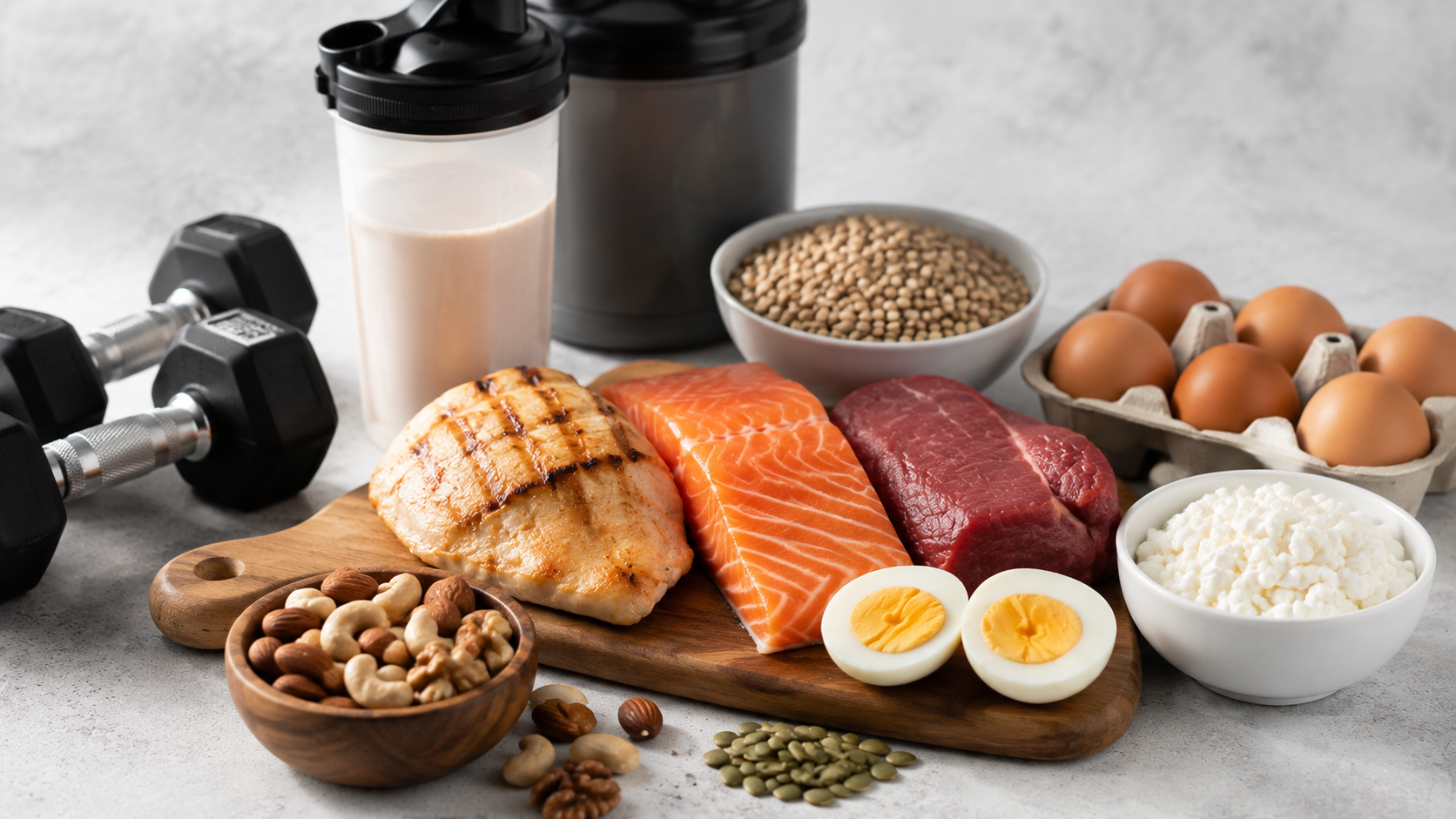
What national data says about average intake
According to Spain's National Dietary Intake Survey (ENIDE), conducted by the Spanish Food Safety and Nutrition Agency (AESAN), protein's percentage contribution to the Spanish diet sits above what's recommended at the population level. In other words: on average, Spain doesn't eat too little protein.
This contradicts the increasingly widespread perception that "nobody eats enough protein." At the aggregate level, the problem usually isn't the total amount, but two much less visible factors: how that protein is distributed across the day, and which specific population groups actually fall short of their real needs.
💡 A healthy national average doesn't mean everyone is fine: averages hide a lot of individual variability.
The real problem: distribution, not just amount
Sports nutrition research shows the body makes better use of protein for muscle synthesis when it's spread across several 20-40 g servings throughout the day, rather than concentrated in a single meal (typically dinner). In typical eating patterns, a "protein-poor breakfast, protein-heavy dinner" pattern is very common, which isn't optimal even if the daily total is correct.
Comparison: typical vs. recommended distribution pattern
| Meal | Typical pattern (approx.) | Recommended pattern |
|---|---|---|
| Breakfast | 5-10 g of protein | 20-30 g of protein |
| Lunch | 25-35 g of protein | 20-40 g of protein |
| Dinner | 35-45 g of protein | 20-40 g of protein |
You can see the full breakdown of how much protein you need and how to distribute it in our guide on how much protein you really need per day.
Who is actually at risk of low protein intake?
Even though the population average is adequate, specific groups face a genuinely higher risk of insufficient intake:
- Older adults: appetite decreases with age, and older adults actually need relatively more protein (not less) to prevent age-related muscle loss (sarcopenia).
- People on poorly planned weight-loss diets: restricting calories without paying attention to protein makes it easy to fall below what's needed to preserve muscle mass.
- Poorly planned vegetarian or vegan diets: hitting total protein targets is entirely possible with plant foods, but it requires more attention than a poorly planned omnivorous diet.
🎯 If you only changed one thing, make it this: add a real protein source to breakfast (eggs, Greek yogurt, cottage cheese) instead of concentrating the day's protein at dinner.
Frequently asked questions
So I don't need to worry about protein at all?
It's not that simple. If your goal is just general health maintenance, your total intake is likely already sufficient. But if you're aiming to build muscle, lose fat while preserving muscle, or belong to a higher-risk group (older adults, restrictive diets), it's worth paying attention to both amount and distribution.
Why has the idea that "nobody eats enough protein" become so popular?
Probably a combination of two factors: the rise of strength training (which genuinely increases protein needs) and protein supplement marketing, which has an interest in generalizing a problem that, at the average population level, is less widespread than it appears.
How do I know if my own protein distribution is adequate?
The most practical way is to roughly note how much protein you eat at each main meal for a few days, and check whether any meal is clearly below 20 g.
See your real protein distribution
With Comeloia you can photograph each meal and instantly see how much protein it contains, making it easy to spot at a glance if your breakfast is falling short.


Summary: what to remember
- On average, protein intake in Spain sits above, not below, recommendations according to ENIDE data.
- The real problem is usually distribution: little protein at breakfast, a lot at dinner.
- Older adults, poorly planned weight-loss diets, and unplanned vegetarian/vegan diets carry genuinely higher risk of deficiency.
- Spreading 20-40 g of protein across 3-4 meals is more effective than concentrating it in one.
- A breakfast with real protein is the simplest, highest-impact change for most people.
← Back to blog