What makes a food more filling per calorie
In 1995, researcher Susanna Holt and her team at the University of Sydney published the first scientifically validated satiety index in the European Journal of Clinical Nutrition. They gave different groups of people 240-kcal portions of 38 different foods and measured their hunger every 15 minutes for 2 hours. The result: boiled potato turned out to be the most filling food in the study, scoring seven times higher than the least filling food, the croissant.
The study identified three characteristics that predict a food's satiating power: its water content, its fiber content, and its protein content. The more water and fiber per calorie, and the more protein, the more filling that food is relative to the energy it provides.
💡 According to Holt et al. (1995), 76% of the foods tested were more filling than white bread, which was used as the reference point with a score of 100.
20 highly filling, low-calorie foods
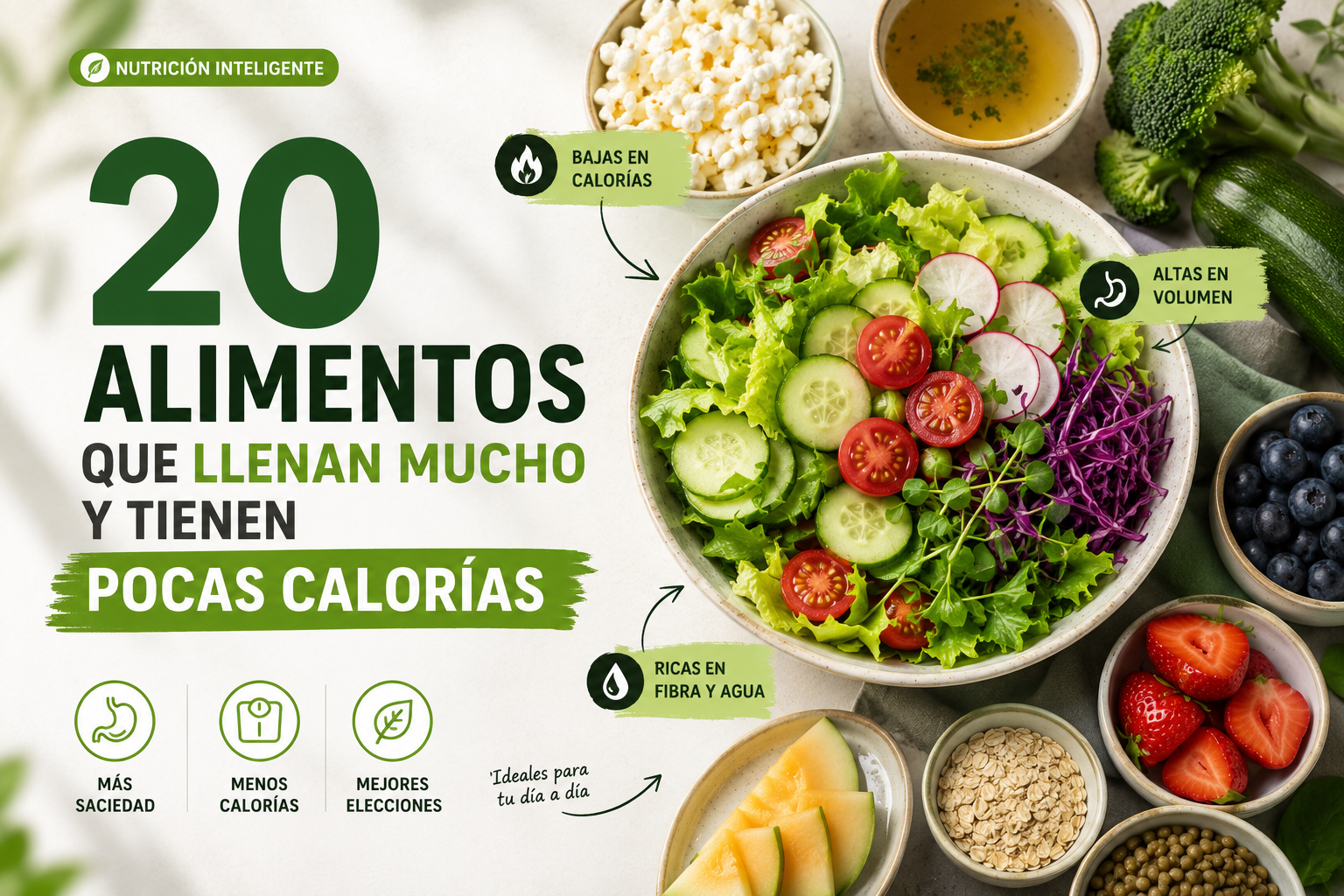
Combining the findings of that study with nutritional composition data, here's a list of 20 foods that stand out for their satiety-to-calorie ratio:
| Food | Approx. kcal/100g | Why it's so filling |
|---|---|---|
| Boiled potato (with skin) | 87 | The most filling food identified in Holt's study |
| Cooked oatmeal (porridge) | 71 | High in soluble fiber, swells with water |
| White fish (hake, cod) | 80-90 | Very high protein, very low fat |
| Orange | 47 | High water and fiber content |
| Apple | 52 | Water, fiber and slow chewing |
| Cooked whole wheat pasta | 124 | Fiber and slower digestion than refined pasta |
| Eggs | 143 | High-quality protein |
| Plain Greek yogurt | 97 | High protein, dense texture |
| Vegetable soup (broth) | 20-40 | Very high water content |
| Chicken breast | 165 | High-quality lean protein |
| Cooked lentils | 116 | Combined fiber and plant protein |
| Popcorn (no butter) | 380 (but very light per serving) | Large air volume per calorie |
| Watermelon | 30 | Over 90% water |
| Cooked broccoli | 35 | Fiber, water and very few calories |
| Cottage cheese | 98 | Slow-digesting protein (casein) |
| Grapes | 69 | Water, fiber and chewing |
| Carrot sticks | 41 | Fiber and volume, very low calories |
| Cooked chickpeas | 164 | Fiber and plant protein |
| Grapefruit | 42 | Water and fiber, low glycemic index |
| Egg whites | 52 | Nearly pure protein, almost no fat |
How to apply this day to day
- Start meals with something low in calorie density: a vegetable soup or a big salad before the main course helps you arrive less hungry.
- Prioritize protein at every meal: it was, along with water and fiber, one of the three factors that most predicted satiety in the original study.
- Choose whole versions over processed ones: a whole orange is far more filling than its juice, even with similar calories.
- Don't fear volume: you can build large, visually generous plates without spiking calories, if you pick the right base ingredients.
🎯 A fun fact from the study: foods high in both fat and sugar simultaneously (like croissants or fried potatoes) were consistently the least filling per calorie in the entire experiment.
This concept ties directly into what we cover in our guide on energy density of foods: the lower the calorie density and the more water, fiber and protein, the more volume you can eat for the same number of calories.
Frequently asked questions
Why is boiled potato so filling if it's "full of carbs"?
Boiled potato combines a high water content, a notable amount of fiber (especially in the skin), and a type of starch that digests relatively slowly, which explains its high score in Holt's study, well above other carb-rich foods like white bread or white rice.
Do these foods work for any type of diet?
Yes, most are staple foods in any healthy eating pattern (Mediterranean, vegetarian, etc.). You can adapt them to your preferences, for example swapping fish or chicken for legumes if you follow a vegetarian diet.
Does eating these foods guarantee weight loss?
Not on their own: weight loss depends on your total calorie balance over time. What these foods offer is help feeling full while consuming fewer total calories, which makes maintaining that balance easier without hunger.
Discover how filling your own meals really are
With Comeloia you can photograph your meals and instantly see their calories, to check whether you're building high-volume, low-calorie-density plates.


Summary: what to remember
- Holt et al.'s 1995 study scientifically demonstrated that not all calories are equally filling.
- Water, fiber and protein are the three factors that most predict satiety per calorie.
- Boiled potato was the most filling food identified in the original study.
- Building meals around these foods helps you eat more volume without spiking calories.
- No single food guarantees weight loss on its own: total calorie balance is what matters.
← Back to blog