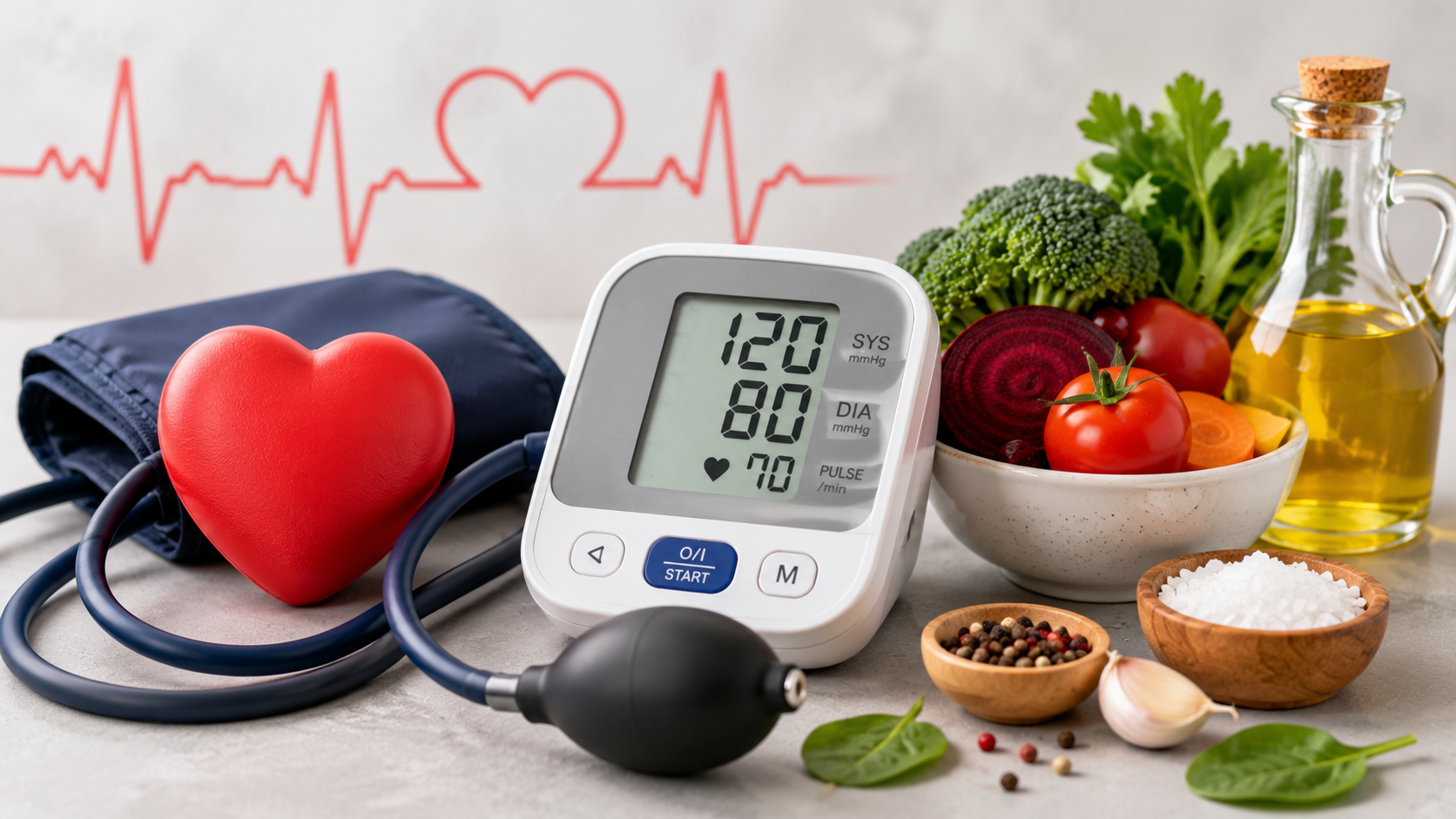
The DASH diet: the most studied eating pattern for hypertension
DASH stands for "Dietary Approaches to Stop Hypertension," an eating pattern specifically developed to lower blood pressure through controlled clinical studies. It's built around abundant vegetables, fruit, low-fat dairy, whole grains, legumes and nuts, with reduced sodium, red meat and added sugar.
A meta-analysis of randomized controlled trials published in Nutrition, Metabolism and Cardiovascular Diseases found that the DASH diet reduces systolic blood pressure by an average of 6.74 mmHg and diastolic pressure by 3.54 mmHg compared with a control diet, a reduction comparable to some first-line antihypertensive medications.
💡 For context: the FDA requires a new antihypertensive drug to lower systolic pressure by at least 3 to 4 mmHg to be considered effective. The DASH diet alone exceeds that threshold.
The role of sodium and potassium
Excess sodium (salt) is one of the dietary factors most closely tied to hypertension. The landmark DASH-Sodium trial showed that reducing sodium intake from high to low levels can lower systolic pressure by up to 6.7 mmHg, and that this effect adds to the benefit of following a DASH-style pattern.
Potassium works in a somewhat opposite direction: it helps the body excrete sodium and relax blood vessel walls. Foods rich in potassium, calcium and magnesium (the three mineral pillars of the DASH diet) amplify the effect of reducing sodium.
Comparison: foods by sodium and potassium content
| Food | Sodium (mg/100g) | Potassium (mg/100g) |
|---|---|---|
| Banana | ~1 mg | ~360 mg |
| Cooked spinach | ~24 mg | ~466 mg |
| Cooked white beans | ~2 mg | ~400 mg |
| Baked potato with skin | ~10 mg | ~535 mg |
| Cured ham | ~2200 mg | ~350 mg |
| Instant packet soup | ~800 – 1200 mg | ~100 mg |
The best foods to include
- Leafy greens (spinach, chard): high in potassium and natural nitrates, linked to improved vascular function.
- Banana, avocado and potato with skin: among the most concentrated potassium sources.
- Legumes: provide potassium, magnesium and fiber, three key DASH nutrients. See more examples in our guide to high-fiber foods.
- Low-fat dairy: provides calcium, another mineral included in the original DASH trials.
- Oily fish: its omega-3 content is linked to additional cardiovascular benefits.
Foods to moderate
- Cured and processed meats: among the most concentrated sources of hidden sodium.
- Packaged soups and sauces: can provide half your daily sodium limit in a single serving.
- Salty snacks and packaged appetizers: combine high sodium with low nutritional density.
- Bread and packaged pastries: even if they don't taste "salty," they're often a significant, less-visible source of sodium.
🎯 Practical tip: most dietary sodium doesn't come from the salt shaker at home, but from processed and pre-cooked foods. Cooking more at home with fresh ingredients is, by itself, one of the most effective ways to reduce sodium.
Frequently asked questions
Is diet alone enough to control hypertension?
For many people with mild hypertension, dietary and lifestyle changes can have a meaningful impact, but decisions about adjusting, maintaining or stopping medication should always be made by a medical professional, never on your own.
How much sodium is recommended per day?
Major health guidelines recommend not exceeding 2,000-2,300 mg of sodium per day (roughly 5-6 g of salt), though people with hypertension often benefit from staying closer to the lower end of that range.
Are potassium supplements an alternative to eating more fruits and vegetables?
Potassium supplementation isn't recommended without medical supervision, since excess potassium can be dangerous, especially for people with kidney problems. The safest way to increase potassium is through foods like fruit, vegetables and legumes.
Track your sodium intake without the hassle
With Comeloia you can photograph your meals and get an instant sense of their nutritional makeup, helping you build a more balanced eating pattern day by day.


Summary: what to remember
- The DASH diet is the eating pattern with the strongest scientific evidence for lowering blood pressure.
- Reducing sodium while increasing potassium, calcium and magnesium amplifies the combined effect.
- Prioritize leafy greens, legumes, banana, low-fat dairy and oily fish.
- Moderate cured meats, packaged soups, salty snacks and processed pastries.
- Any adjustment to blood pressure medication should always be done under medical supervision.
← Back to blog